For a press-fit bushing, make the housing bore H7 and choose the bushing outside diameter from ISO 286: p6 for a light press fit that can still be removed, s6 for a stronger, more permanent joint. Give the bushing a lead-in chamfer, size its bore for the size it will have after pressing (or ream it in place), and check that the fit still holds at the highest service temperature if the housing is aluminum.
Press-fit bushings and sleeves look simple, but most field problems — loose sleeves, seized shafts, cracked housings — trace back to a fit chosen without considering wall thickness, material pairs or bore closure. This guide works through those decisions and ends with a list of what belongs on the drawing.
Choosing the interference
The fit codes and their tolerance tables are covered in our ISO fits guide, so here only the choice. In the hole-basis system the housing stays H7 and the bushing OD letter sets the grip. For a 20 mm diameter, H7/p6 gives 0.001–0.035 mm interference and H7/s6 gives 0.014–0.048 mm (ISO 286-2 values). The minimum interference is what decides whether the bushing can creep or spin; the maximum decides press force and housing stress.
- H7/n6 — transition fit; often too light to rely on for retention alone, but common for locating sleeves that are also clamped.
- H7/p6 — light press fit. Removable without damage in most cases; a common default for bushings in steel housings.
- H7/r6 — between p6 and s6; used where p6 is marginal.
- H7/s6 — medium press fit for permanent sleeves; may need heating the housing or cooling the bushing to assemble without galling.
- Heavier fits (u6 and beyond) are mostly assembled thermally and are rarely needed for bushings.
Bore closure: the bushing bore gets smaller
Pressing a bushing into a rigid housing compresses it, and its bore shrinks. For thin-walled bushings in stiff steel housings, a large part of the interference shows up as bore closure; thicker walls and more flexible housings transfer less. A shaft fit that was correct on the loose bushing can turn into a seizure once it is pressed.
- Option 1: specify the bushing bore as an “after assembly” size and let the bore be reamed, honed or bored in place. This is the most reliable route for precise running fits.
- Option 2: machine the bushing bore oversize by the expected closure. Workable for repeat parts once the closure has been measured on samples.
- Option 3: for sintered self-lubricating bushings, follow the bushing maker’s housing and shaft tolerances — they are normally given for the pressed state and already account for closure.
- Always say on the drawing whether the bore dimension applies before or after pressing.
Wall thickness and housing stress
Thin bushings follow the housing bore: any ovality or taper in the housing transfers straight into the bushing bore. Very thick bushings in thin housings do the opposite and stress the housing, which can crack around holes or slots near the bore. As a design habit, keep the housing wall around the bore generous, keep cross-holes and slots away from the pressed zone, and check hoop stress when the interference is at its maximum, not its nominal.
Wall thickness also affects how the bushing is machined. A long thin sleeve can distort when it comes off the lathe chuck, so its roundness and the concentricity of OD and bore are easier to hold if both are finished in one setup.
Material pairs and temperature
Interference is set at room temperature but must hold across the service range. Aluminum expands roughly twice as much as steel per degree (approximately 23 vs 12 µm/m·K), so a steel sleeve in an aluminum housing loosens as both warm up. For a 20 mm bore and an 80 °C rise, the difference is about 0.018 mm — enough to take most of the grip of a light press fit.
- Steel in aluminum: choose a heavier fit, add a mechanical retention feature, or both. Common on bicycle and automation parts.
- Bronze in steel or cast iron: classic plain bearing pair. Bronze expands more than steel (roughly 18 µm/m·K), so the fit tightens as it warms.
- Steel in steel: thermal behaviour matches; p6 or s6 is chosen on load and removability.
- Polymer bushings: follow the maker’s data. Plastics creep, so their press fits are designed differently from metal ones.
Lead-in chamfers and pressing
A bushing pressed without a lead-in tends to cock, shave material off the housing bore and lose part of its interference. Put a short chamfer or a short pilot diameter on the bushing entry edge, and a small chamfer on the housing bore entrance. A shallow lead-in angle centres the part better than a steep one.
- Press with an arbor that supports the bushing face and guides its bore; do not hammer.
- Lubricate the joint with a light press-fit lubricant unless an adhesive is used.
- For aluminum housings, heating the housing (or freezing the bushing) reduces galling at higher interferences.
- Avoid pressing over a threaded or anodized surface unless it is designed for it; anodizing changes the diameter and can flake under pressing.
When interference alone is not enough
Vibration, thermal cycling and axial loads can walk a plain press fit out of its bore. Adding a positive feature is often cheaper than pushing the interference higher.
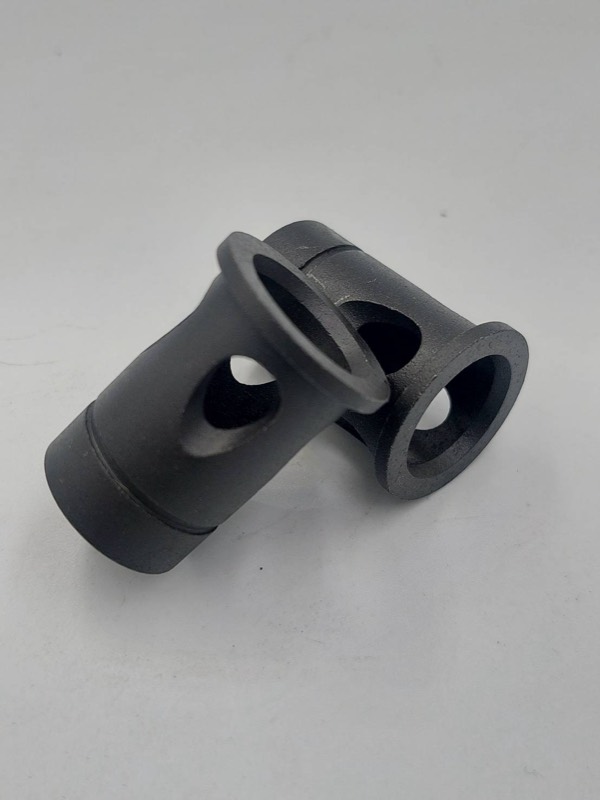
- Flanged bushing (shoulder): takes axial load in one direction and sets the insertion depth; the shoulder face also gives a clean datum.
- Straight or diamond knurl on the bushing OD: the knurl bites into a softer housing such as aluminum. Specify the knurl pitch and the diameter over the knurl.
- Anaerobic retaining compound: fills the gap and adds shear strength; allows a looser fit. Tell the shop if surfaces must stay oil-free or primed.
- Cross pin, set screw or retaining ring: positive, serviceable, but adds holes and stress raisers.
What to put on the bushing and housing drawings
A complete press-fit callout lets the shop machine both parts to the right sizes and lets incoming inspection check them.
- Housing bore: Ø with fit code (for example Ø20 H7), roundness or cylindricity if critical, surface finish, entry chamfer.
- Bushing OD: Ø with fit code (for example Ø20 p6), lead-in chamfer or pilot, knurl if used.
- Bushing bore: size and tolerance, marked “before pressing” or “after assembly”; reaming allowance if bored in place.
- Concentricity or runout between OD and bore when the bushing locates a shaft.
- Material and finish of both parts, plus any retaining compound or primer.
- Assembly note: press, heat or freeze; who assembles.
Bushings and sleeves at Chi Xin
Chi Xin Technology is a CNC machine shop in Nantun District, Taichung, Taiwan, founded in 2022. We run 5+ CNC machines — 4.5-axis CNC machining centers and CNC lathes — and mainly machine aluminum alloys and alloy steel, with a metal tolerance of 0.02 mm. We also offer wire EDM and surface finishing including anodizing, and we export to customers in Europe and North America.
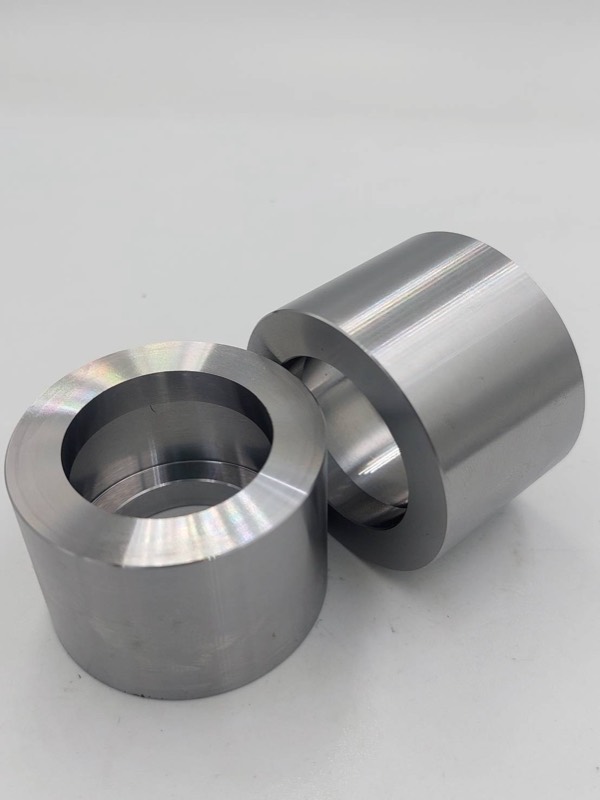
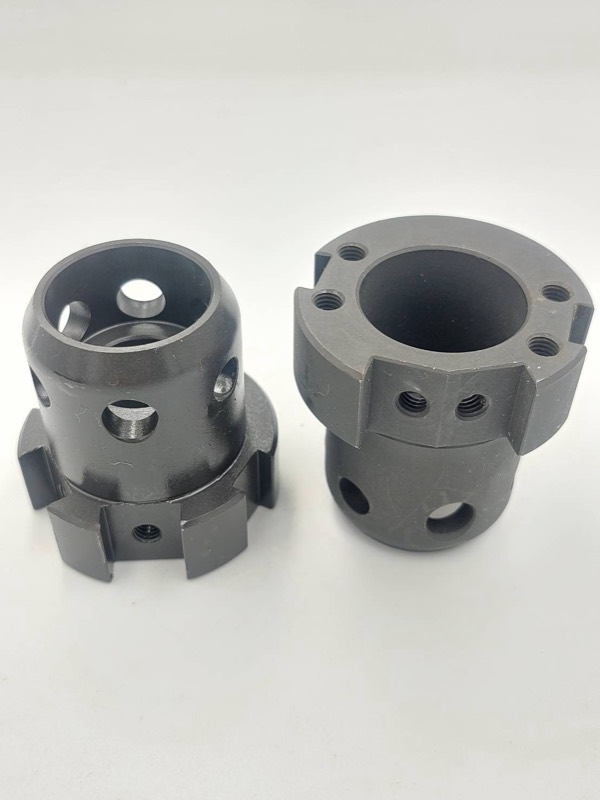
Bushings, sleeves and spacers are routine work on our CNC lathes, with OD and bore finished in aluminum or alloy steel; if you need the bushing pressed and the bore finished after assembly, tell us in the RFQ and we confirm it in the quotation.
Frequently asked questions
Which fit should I use for a bronze bushing in a steel housing?
H7/p6 is a common starting point for a bushing that may be replaced later; H7/s6 for a permanent installation. Then check bore closure so the shaft still runs freely after pressing.
Why did my bushing bore shrink after pressing?
The interference compresses the bushing wall, and part of it shows up as a smaller bore. Thin walls and stiff housings make it worse. Size the bore for the pressed state, or finish it after assembly.
Can I press a steel sleeve into an aluminum part?
Yes, it is very common, but aluminum expands more than steel, so the fit loosens as temperature rises. Use a heavier fit, a knurl, a shoulder or retaining compound, and check the fit at your maximum temperature.
Do you press bushings into housings?
Tell us in the RFQ whether you need loose parts or an assembled unit and we confirm in the quotation how it is done.
Should the bushing OD be ground?
For IT6 tolerances on small diameters, careful turning is often enough; for tighter fits, long sleeves or hardened steel, grinding may be needed. State the tolerance and finish and the process follows from that.