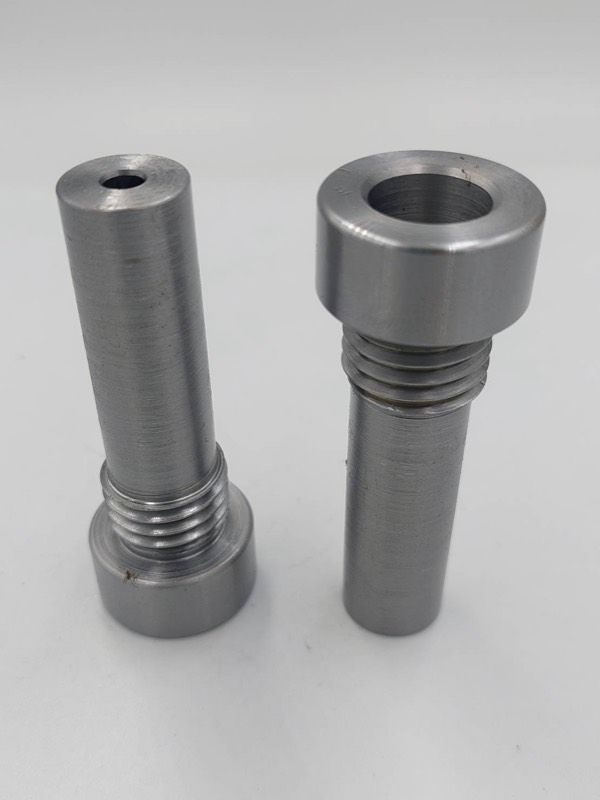
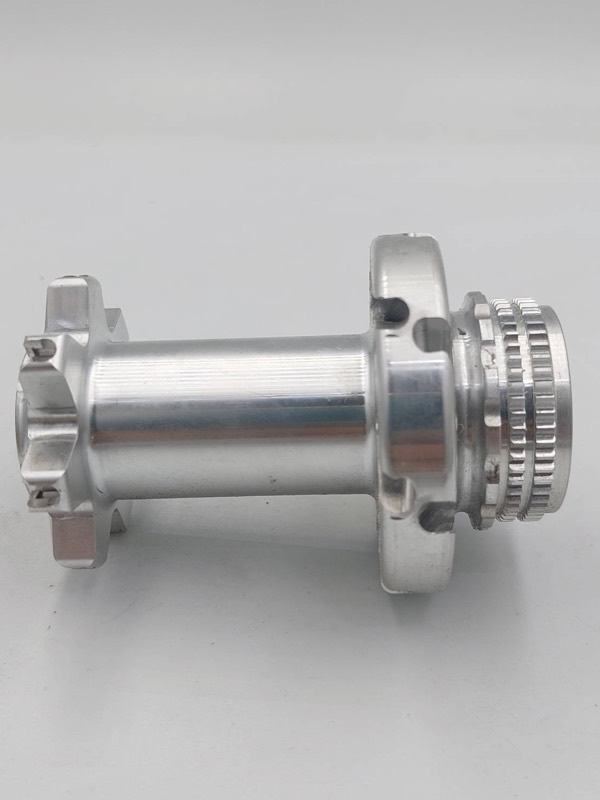
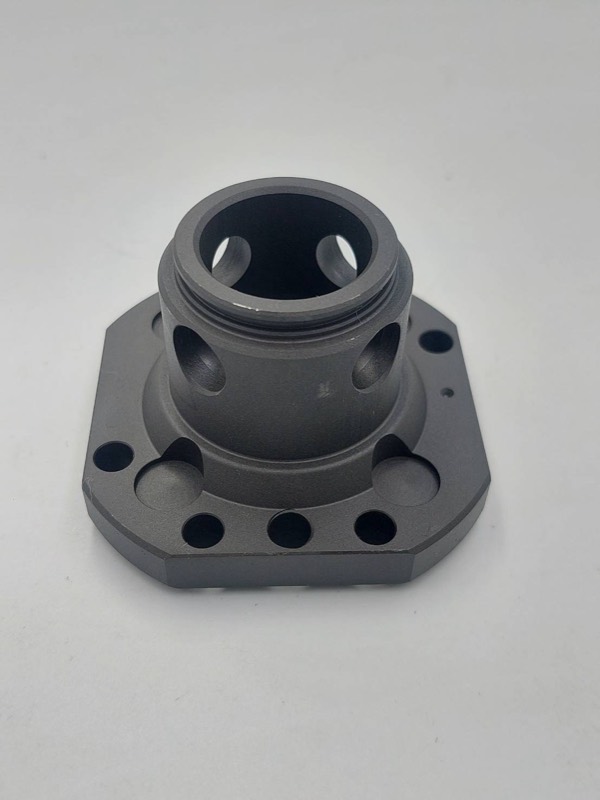
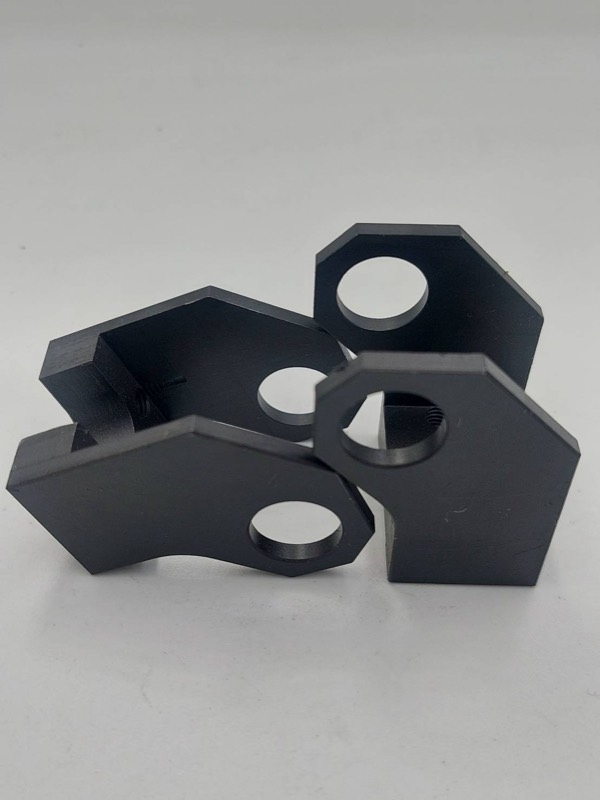
4140 is a chromium-molybdenum alloy steel used for shafts, pins, gears, fixtures and other parts that need more strength and toughness than plain carbon steel. In Europe the closest grade is 42CrMo4 (1.7225); in Japan, SCM440.
The main decision when you order 4140 parts is when the steel gets its hardness: before machining or after. That choice changes cost, tolerance and lead time.
Three ways to buy 4140 parts
- Annealed: soft and easy to machine. Fine for parts that do not need high strength, or that will be heat treated later.
- Pre-hardened (often called 4140 HT, typically around 28–32 HRC): machined in the hardened state, so there is no heat treatment step and no distortion afterwards. Slower to machine than annealed stock.
- Machined annealed, then hardened and tempered: reaches higher hardness, but parts can distort and scale in heat treatment, so critical features may need grinding or finish machining after hardening.
How to choose
If the hardness you need is within the pre-hardened range, pre-hardened stock is usually the simplest route: one process, no distortion, predictable tolerances. If you need higher hardness or a hardened surface (for example induction hardening on a bearing seat), plan for heat treatment after machining and leave stock on features that must stay accurate.
Drawing notes that avoid problems
- State the material grade and the condition: “4140 annealed”, “4140 pre-hardened 28–32 HRC” or “4140, harden and temper to … HRC after machining”.
- Say whether the hardness must be checked and reported.
- Mark which dimensions apply after heat treatment and plating.
- Specify the finish: black oxide, zinc plating, nickel or oil only. Plating adds thickness on threads and fits.
- Keep thread tolerances realistic for plated parts, or mask threads before plating.
Corrosion protection
4140 rusts. Unfinished parts need oil and suitable packing for export. For parts in service, black oxide gives mild protection with almost no dimensional change; zinc or nickel plating protect better but add a few microns that must be allowed for on precise fits.
Machining considerations
Annealed 4140 machines cleanly with ordinary carbide tooling. Pre-hardened stock in the high 20s to low 30s HRC is still machinable on CNC lathes and machining centers but needs lower cutting speeds and more tool changes, which shows up in cycle time and cost. Fully hardened 4140 (above roughly 40 HRC) is normally finished by grinding, hard turning or wire EDM rather than conventional milling.
Long slender shafts can bend from residual stress once material is removed from one side. Stress-relieved bar, balanced machining and leaving finishing passes until last help keep them straight; on very long shafts, specify the straightness you actually need.
Typical 4140 parts
- Shafts, axles and spindles with bearing seats
- Pins, bolts and shoulder screws for machinery
- Flanges, couplings and hubs that carry torque
- Fixture and tooling components that must resist wear
- Motorcycle and automotive pins, adapters and brackets under load
Threads and fits in 4140
Threads cut in pre-hardened 4140 are strong but taps wear quickly; for small threads in hard material, thread milling is often more reliable than tapping. Bearing fits such as k6 or h6 on a shaft are normally turned to size; if the part will be hardened later, leave grinding stock on those diameters and mark the final size as applying after heat treatment.
4140 vs 1045 and 4340
1045 carbon steel is cheaper and fine for lightly loaded parts. 4340 adds nickel for higher toughness in large sections. For most shafts, pins and fixtures in machinery, 4140 is the practical middle ground. See our comparison pages for property tables.
4140 parts at Chi Xin
Chi Xin Technology is a CNC machine shop in Nantun District, Taichung, Taiwan, founded in 2022. We run 5+ CNC machines — 4.5-axis CNC machining centers and CNC lathes — and mainly machine aluminum alloys and alloy steel, with a metal tolerance of 0.02 mm. We also offer wire EDM and surface finishing including anodizing, and we export to customers in Europe and North America.
Alloy steel is one of our two main materials. We turn shafts, pins and bolts on CNC lathes and mill blocks and flanges on 4.5-axis machining centers, and we arrange heat treatment and plating with the order when the drawing calls for it.
Frequently asked questions
Is 4140 the same as 42CrMo4?
42CrMo4 (1.7225) is the usual European equivalent of AISI 4140, and SCM440 the Japanese one. Small differences in chemistry exist, so state which standard your drawing follows.
Should I order 4140 pre-hardened or heat treat after machining?
If the pre-hardened range (around 28–32 HRC) meets your requirement, pre-hardened avoids heat-treatment distortion. For higher hardness, heat treat after machining and allow for finishing of critical features.
What finish is best for 4140 parts?
Black oxide for mild protection with almost no size change; zinc or nickel plating for better corrosion protection, allowing for coating thickness on fits and threads.
What tolerance can you hold on 4140?
Our metal tolerance is 0.02 mm on features that need it; we confirm critical tolerances in the quote.
Can 4140 be welded?
It can, but it needs preheating and often post-weld heat treatment because of its hardenability. If your part is welded after machining, tell us so we can discuss the sequence.