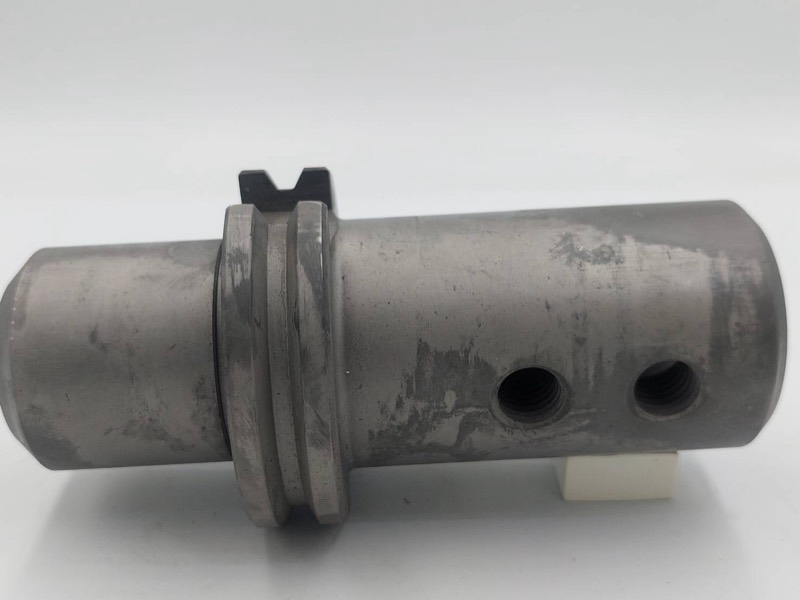
A manifold block routes fluid between valves, pumps and actuators through drilled passages inside one solid block. It replaces hoses and fittings, saves space and removes leak points — but only if the passages, ports and sealing faces are machined correctly.
This guide covers what matters when you design a custom manifold for CNC machining and what to include when you ask a machine shop for a quote.
Choosing the material
The working pressure and the fluid decide the material more than anything else.
- Aluminum 6061-T6: light and quick to machine, common for pneumatic manifolds and low-to-medium pressure hydraulics. Anodizing protects the outside.
- Aluminum 7075-T6: higher strength than 6061 when wall thickness between passages is tight, but harder to anodize evenly.
- Carbon and alloy steel (for example 1045 or 4140): for higher hydraulic pressures. Usually finished with zinc plating, nickel or black oxide against corrosion.
- Stainless steel (for example 304 or 316): for water-based fluids, food or outdoor use where plating is not acceptable.
Passages and cross holes
Most manifold passages are straight drilled holes that meet inside the block. Where two holes intersect, a burr forms that you cannot see from outside — and loose burrs are a classic cause of valve failure later in the system.
- Keep passages straight and reachable from a face; plug the drilling access holes with threaded plugs or press-in expanders.
- Leave enough wall between passages and ports; as a rough rule many designers keep at least a few millimeters, more at higher pressure.
- Specify that intersecting holes must be deburred and the block cleaned and flushed before packing.
- Deep, small-diameter holes are slow and risky to drill; a slightly larger diameter often costs less.
Port threads and sealing faces
Name the port standard on the drawing, not just the thread size. The same nominal size seals differently depending on the standard:
- SAE J1926 / ISO 11926 (UNF straight thread with O-ring boss)
- ISO 6149 (metric straight thread with O-ring)
- BSPP (ISO 1179) with bonded or elastomer seal
- NPT or BSPT tapered threads, which seal on the thread itself
- Cartridge valve cavities, which need the cavity form from the valve maker’s data sheet
Surface finish and flatness
Faces that seal with O-rings or gaskets need a defined roughness and flatness. Put the requirement on those faces only — not on the whole block — so the rest can be machined at a normal finish and lower cost.
Testing
If the block must be pressure tested or leak tested before shipping, state the test medium, pressure and hold time in the RFQ, and agree who performs it. Many buyers test manifolds after assembling their own valves.
Tolerances that matter — and those that do not
On a manifold, only a few features are functional: port positions where valves or fittings bolt on, sealing faces, cartridge cavities and the mounting holes. The outside envelope of the block rarely matters. Put tight tolerances and position callouts on the functional features and leave the rest at a general tolerance such as ISO 2768-m; it shortens machining time without affecting the system.
Where a valve sub-plate pattern is used (for example ISO 4401 / NFPA D03 or D05 interfaces), reference the standard pattern on the drawing so the shop machines the bolt and port positions exactly to it.
Plugs, finishing and cleanliness
Access holes left by drilling are closed with threaded plugs (often with O-rings or thread sealant) or press-in expander plugs. Specify which type you want and whether the shop installs them. If the block is anodized or plated, decide whether plugs go in before or after finishing — threads and sealing faces may need masking.
- Aluminum: clear or hard anodizing on the outside; sealing faces sometimes left bare or masked.
- Steel: zinc, zinc-nickel or nickel plating; internal passages are usually left unplated and oiled.
- Cleanliness: state if you need a cleanliness level for the internal passages (many hydraulic users refer to ISO 4406 contamination classes for the fluid system).
- Packing: plastic caps on every open port so dirt cannot get in during shipping.
What to send with your RFQ
- 3D model (STEP) plus a 2D drawing with port standards, critical positions and sealing faces marked
- Material and any heat treatment or plating
- Working pressure and fluid
- Quantity per order and per year
- Cleaning, deburring and test requirements
Manifold blocks at Chi Xin
Chi Xin Technology is a CNC machine shop in Nantun District, Taichung, Taiwan, founded in 2022. We run 5+ CNC machines — 4.5-axis CNC machining centers and CNC lathes — and mainly machine aluminum alloys and alloy steel, with a metal tolerance of 0.02 mm. We also offer wire EDM and surface finishing including anodizing, and we export to customers in Europe and North America.
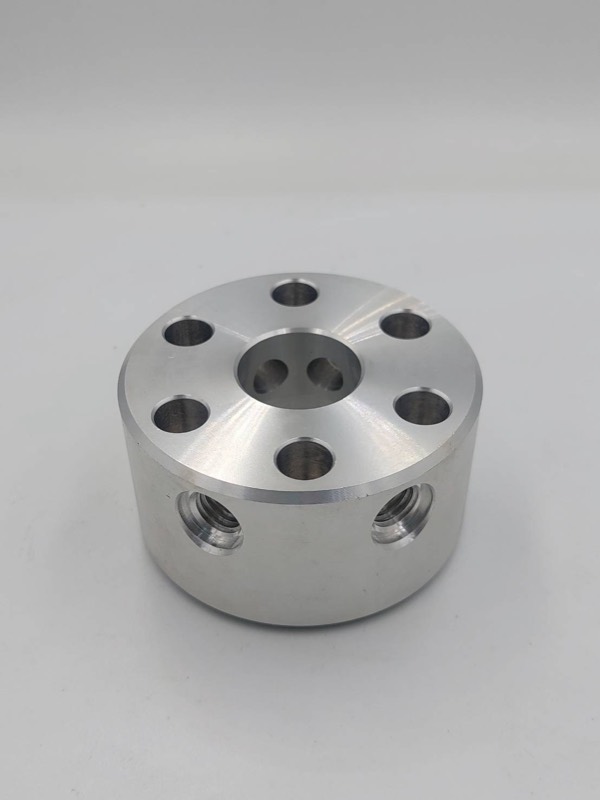
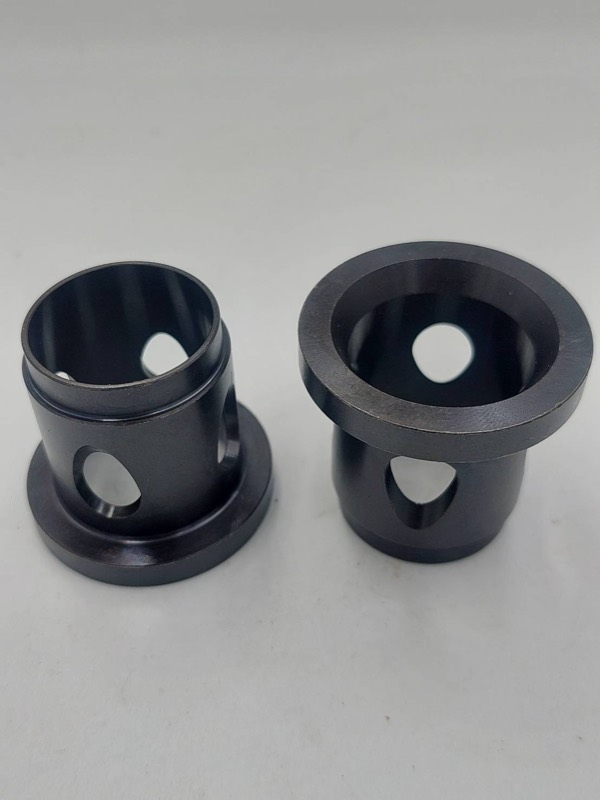
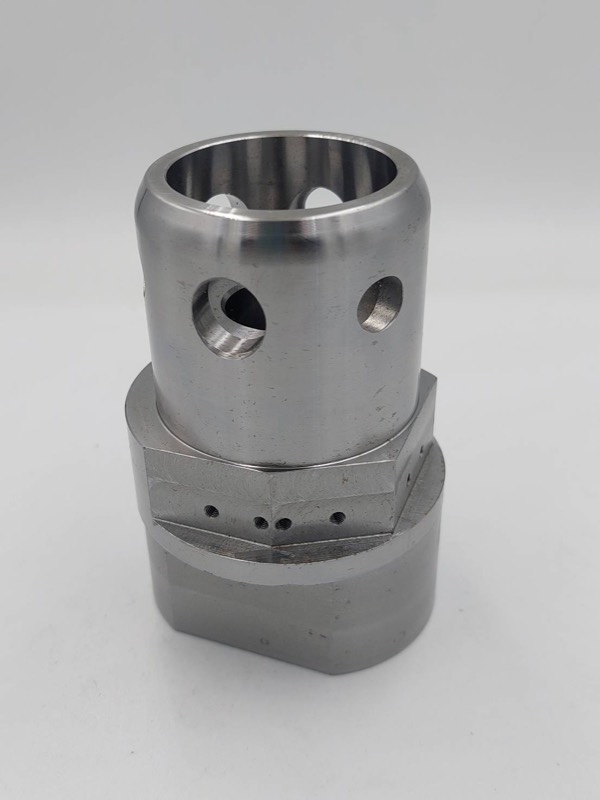
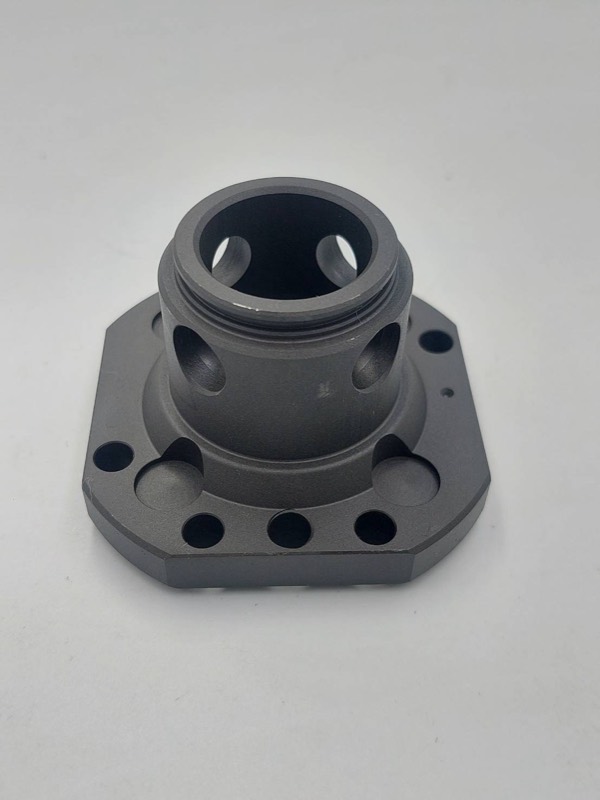
We machine aluminum and steel manifold and distributor blocks on our 4.5-axis machining centers, which lets us reach ports on several faces with fewer setups. Photos of blocks we have made are shown on this page.
Frequently asked questions
Aluminum or steel for a hydraulic manifold?
Aluminum suits pneumatic and lower-pressure hydraulic blocks where weight matters; steel suits higher pressures. Base the choice on working pressure, fluid and wall thickness between passages.
Why do intersecting holes need deburring?
Drilling leaves burrs where passages meet inside the block. If they break loose later they can jam valves, so specify deburring and cleaning of internal intersections.
Can you machine cartridge valve cavities?
Send the cavity specification from the valve maker together with your drawing and we will confirm in the quote.
Do you pressure test manifolds?
Tell us the test you need in the RFQ and we will confirm in the quotation whether and how it can be done.
How do I reduce the cost of a manifold block?
Keep passages straight and reachable, avoid very deep small holes, use standard port forms and put tight tolerances only on functional features.